
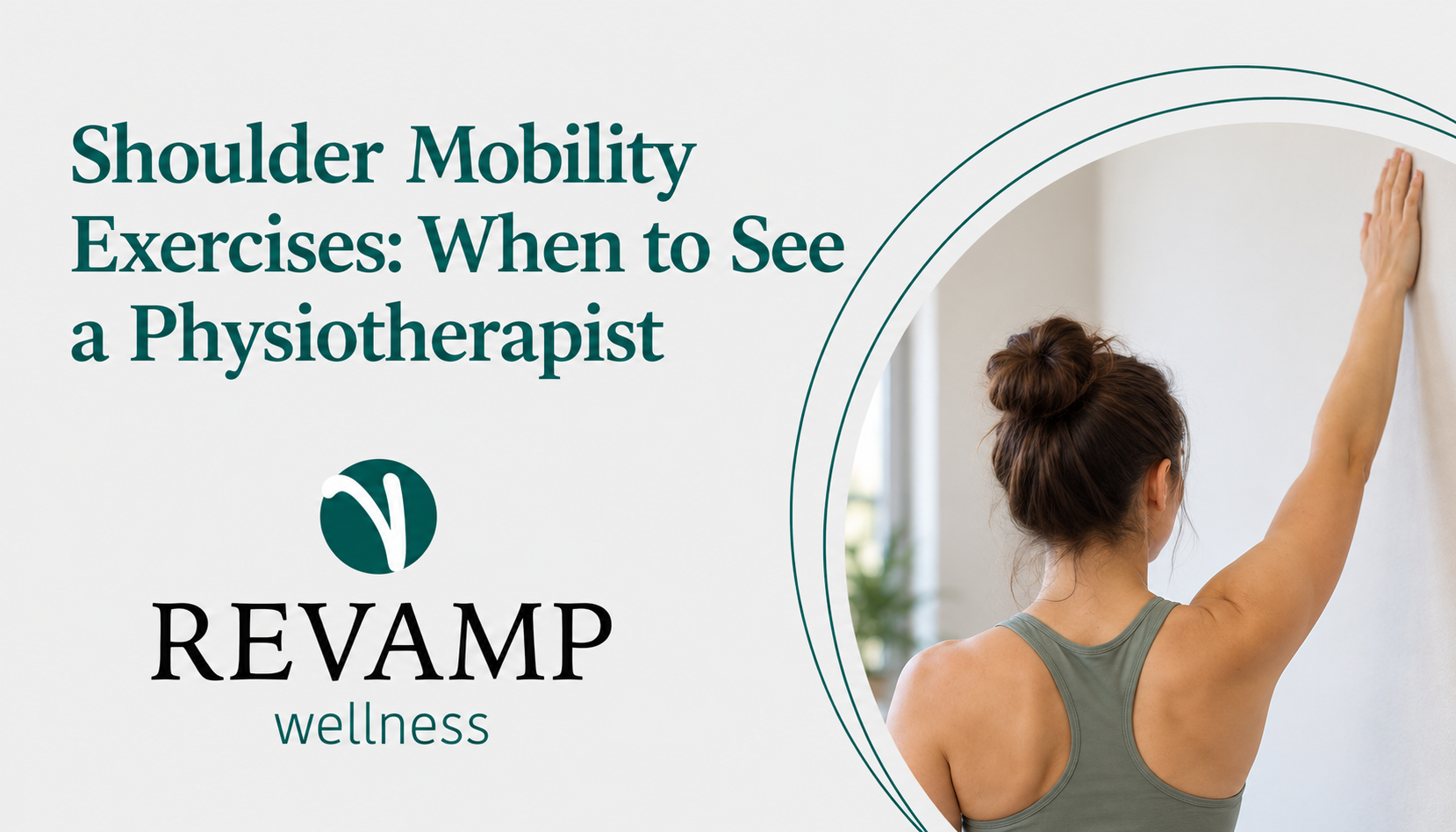
Reaching into a cupboard, pulling on a jacket or lifting your arm overhead can become surprisingly difficult when your shoulder feels stiff. If the stiffness is mild, came on gradually and is not linked to a recent injury, gentle shoulder mobility exercises may be a reasonable place to start. Move within a comfortable range. If pain is worsening, you have noticeable weakness or ordinary activities are becoming difficult, arrange an assessment rather than forcing a stretch.
The movements below are general starting points for adults with uncomplicated stiffness. They are not a treatment plan for a diagnosed shoulder condition or a substitute for advice after an injury or surgery.
What does shoulder mobility mean?
Shoulder mobility is your ability to move your arm and shoulder blade through a useful, controlled range. Think of reaching overhead, rotating your arm or bringing it across your body. Flexibility describes how much a tissue can lengthen; strength describes how well your muscles handle force. Comfortable shoulder movement draws on all of these, so a shoulder that feels tight does not automatically need a harder stretch.
A mild restriction can feel different from pain when lifting the arm or a shoulder that has become progressively harder to move. The cause is not always obvious from symptoms alone. If one movement repeatedly hurts or your range is changing, a physiotherapist can help determine which movements are appropriate.
Before you try shoulder exercises at home
Start with small, slow movements. Let the shoulder move through a range you can tolerate rather than trying to match someone else’s position. Stop a movement if it causes sharp pain, new tingling or weakness, or symptoms that clearly worsen. If you recently injured your shoulder, had surgery or were given a rehabilitation plan, follow your treating clinician’s instructions before trying this routine.
Four gentle shoulder mobility exercises for beginners
You can try the movements that feel manageable; there is no need to complete all four. Keep your breathing easy and reassess how your shoulder feels during the movement and afterward.
1. Pendulum swings
Starting position: Stand beside a sturdy table. Support your body with one hand, lean slightly forward from the hips and let the other arm hang relaxed.
Movement: Gently shift your body to let the hanging arm swing forward and back. Try small side-to-side swings or circles if comfortable. Let your body create the movement rather than actively lifting the arm.
What to watch for: The swing should feel easy. Stop if it produces sharp pain. If the leaning position aggravates your back, skip this exercise and ask for an alternative.
2. Wall walk for overhead reach
Starting position: Face a wall and rest the fingertips of one hand on it at a comfortable height.
Movement: Slowly walk your fingers upward as far as your shoulder comfortably allows, then walk them back down. Keep your neck relaxed and avoid hiking the shoulder toward your ear.
What to watch for: Begin with a modest reach. Do not push through a painful catch or force your arm higher just to achieve a bigger range.
3. Cross-body shoulder stretch
Starting position: Sit or stand with relaxed shoulders. Bring one arm gently across your chest.
Movement: With your other hand, support the upper arm and draw it slightly closer until you feel a mild stretch at the back of the shoulder. Release slowly, then switch sides if comfortable.
What to watch for: Do not pull on the elbow or turn a mild stretch into pain. Leave this movement out if it creates pinching or radiating symptoms.
4. Shoulder blade squeeze
Starting position: Sit or stand tall with your arms resting comfortably by your sides.
Movement: Gently draw your shoulder blades toward each other and slightly down. Ease off and repeat a few comfortable times without holding your breath.
What to watch for: You may notice mild effort between your shoulder blades. Keep your neck relaxed. This movement works on shoulder blade control; it does not diagnose or treat the cause of a painful shoulder.
For another example of controlled movement, see Revamp Wellness’s Shoulder Mobility Exercise: Controlled Articular Rotations. Try it only within a comfortable range and ask a physiotherapist whether it suits your symptoms.
How often should you do shoulder mobility drills?
There is no single schedule or number of repetitions that fits every shoulder. Start with a few gentle movements and notice your response later that day and the next morning. If an exercise repeatedly causes sharper pain or leaves your shoulder more irritated, make the range smaller, pause that exercise and seek advice. Once movement is more comfortable, a physiotherapist may suggest strengthening or other exercises suited to your needs.
Mobility drills, stretches and strengthening: what is the difference?
Mobility drills move through an available range with control. A stretch holds a position to create a gentle pulling sensation. Strengthening exercises help muscles manage force or load. These serve different purposes; more stretching is not automatically the answer to a shoulder that hurts during a lift. Your symptoms and activity goals should guide the choice.
What if your shoulder hurts when lifting or raising your arm?
Avoid repeatedly pushing through the painful part of an overhead reach. You may be able to keep the shoulder moving gently in a smaller, comfortable range, but pain when lifting an arm can have several causes. Seek an assessment if it persists, worsens, affects sleep or makes dressing, work or other routine activities difficult. New weakness after an injury needs prompt medical assessment.
When should you see a physiotherapist?
Book an assessment if shoulder stiffness or pain keeps returning, is becoming more limiting, or is not improving with sensible self-care. You do not need to wait for a fixed number of weeks if daily activities are already difficult. A physiotherapist can ask how the problem started, assess comfortable movement and strength, and suggest exercises that fit your findings and goals.
When does shoulder pain need urgent medical care?
Seek prompt medical care if severe pain follows a fall, your shoulder looks deformed or significantly swollen, you cannot move the arm normally, or you develop numbness or unusual colour or temperature in the arm. If shoulder or arm pain occurs with chest pain or pressure, shortness of breath, sweating, nausea or lightheadedness, call 911. Do not try to exercise through these symptoms.
Can general exercises help with frozen shoulder or a rotator cuff injury?
Gentle movement may be part of an individualized plan, but a general online routine cannot tell you which condition you have or which movements fit its stage of recovery. If you have a markedly restricted shoulder, pain and weakness after an injury, or a known diagnosis, ask a clinician to assess you before following a generic set of stretches.
What happens during a shoulder physiotherapy assessment?
A physiotherapist will usually ask about your symptoms and activities, observe how your shoulder moves and assess strength or nearby areas as appropriate. They can then discuss a plan that may include exercise, changes to activity and follow-up. The exact approach depends on the assessment; no particular result is guaranteed.
Frequently asked questions
What are the best shoulder mobility exercises for beginners?
Pendulum swings and a supported wall walk are two simple ways to explore a gentle range. The right starting movement depends on which actions cause pain, so use only a comfortable range and seek guidance when you are unsure.
Can I do shoulder mobility exercises every day?
Some people tolerate gentle movement regularly, but frequency depends on the exercise, symptoms and any injury history. Begin with a small amount and check how your shoulder responds afterward rather than following a universal daily target.
Why do my shoulders feel tight?
There can be several reasons, including changes in activity or a shoulder condition. A feeling of tightness alone does not identify the cause. Seek assessment if the restriction is new, one-sided, painful or getting worse.
Should I stretch if my shoulder hurts when I lift my arm?
Do not force a stretch through pain. Keep any movement within a comfortable range and arrange an assessment if lifting pain persists, worsens or limits everyday tasks.
Are shoulder range of motion exercises suitable after surgery?
Your surgeon or treating physiotherapist should guide your exercise choices and permitted range after surgery. General online exercises may not match your stage of recovery.
Can mobility exercises fix frozen shoulder or a rotator cuff tear?
A general routine cannot diagnose or cure either condition. An assessment can help determine whether gentle mobility, strengthening or a different approach is appropriate for your situation.
When should I stop exercising and get help?
Stop the exercise if it causes sharp pain, new weakness, tingling or a clear worsening of symptoms. Seek prompt medical care after a serious injury, with deformity or inability to move the arm; call 911 for shoulder or arm pain alongside possible heart attack symptoms.
Shoulder physiotherapy in Langley and Cloverdale
If your shoulder is not improving or you are unsure which exercises are appropriate, Revamp Wellness offers physiotherapy at both locations. A clinician can help you understand your movement limitations and plan a next step that fits your activities.
Explore physiotherapy in Langley or physiotherapy in Cloverdale and book an assessment at the location that suits you.
